The New Zealand Working Holiday Visa for Singaporeans, officially referred to as Singapore Work Exchange Programme Visa by NZ immigration, allows Singaporeans aged 18 to 30) to travel to New Zealand and work there temporarily for up to 12 months.
I’ll be sharing my experience applying for the Visa for you to get an idea of the process if you’re interested in applying too 🙂
Table of Contents
How to Apply for NZ WHV
To apply for the visa, visit the Singapore Work Exchange Programme Visa page on the NZ immigration website.
There is a yearly quota of 300 for Singaporeans, but in the time I’ve considered applying from 2022 to 2024, the SG quota doesn’t seem to run out too fast unlike other countries where people have to wake up super early to apply for the NZ WHV the moment the quota renews for the year.
The cost of the NZ WHV has increased over time. When I applied in 2024, it was 455NZD. As of Jan 2026, the NZ WHV for Singaporeans costs 770 NZD.
How the NZ WHV Works & When to Apply
Understanding how the NZ WHV works will help you decide when to apply for it.
For this WHV, you need to arrive in NZ within 12 months from the day it is approved, and the visa will expire 12 months after your first arrival into New Zealand.
For example:
- If your visa is approved on 17 April 2025, you need to arrive in New Zealand before 17 April 2026
- Let’s say you first arrive NZ on 26th November 2025, your visa will expire 12 months later on 25th November 2026
Once your visa is approved, you have around 1 year to prepare and fly to NZ so don’t apply too early if you need more time to wrap up life in SG (e.g. quitting your job etc).
Supporting Items Required
During the application, Immigration NZ will send an email requesting for 2 supporting items after you have applied for the New Zealand Working Holiday Visa:
- Chest X-Ray Certificate
- Evidence that you either hold a university qualification or have successfully completed the equivalent of at least two years of full-time university study.
Chest X-ray
As Singapore is not listed as a country with low incidence of TB, you’ll be required to submit a chest X-ray.
When to do the chest x-ray?
They will send you an email requesting for the chest x-ray after you have applied for the visa on their website. For me, this was on the same day I applied for the visa.
In the email I received, they requested for the chest x-ray to be submitted within 15 calendar days so make sure you’re in SG and have time within the period of sending your application to get the x-ray done.

Where to get the chest x-ray?
You need to get this done with one of the approved panel physicians by Immigration New Zealand (INZ) which you can find here.
The clinic will help you with the chest X-ray and send it directly to INZ for your WHV application.
My Experience:
I got the chest x-ray done at Radlink in Paragon which cost ~SGD$70. The process was quite fast, I arrived at ~850am and was done by 930am on a weekend.
But I would think it also depends on the crowd on that day as I’ve heard some people have had to wait a few hours before.
I received an email confirming the health assessment has been submitted to INZ 3 days after visiting the clinic.
Education Qualifications
I received an email 6 days after submitting my application that requested for my degree (and the x-ray again).
There isn’t a platform to upload, I just replied to the email with an attachment of my degree certificate and the official transcript.
Application Timeline & Process
It seems like there is no fixed timeline for WHV applications with some being approved within a month and some spanning across several months. Some say it depends on your case officer?
On their website, they say 80% of applications are generally processed within 2.5 weeks.
For me, my Visa was approved within 2 weeks:
- Applied visa: 14 July
- X-ray request: received on the same day i applied for the visa
- X-ray done: 20 July (6 days after application)
- X-ray submitted by clinic: 23 July (9 days after application)
- Request for degree: 20 July (6 days after application)
- Degree submitted: 24 July (9 days after application)
- Visa Approved: 26 July (11 days after application)
Applied Visa, What's Next?
Your next instinct is probably to start planning and preparing everything with backup plans, and backup plans for the backup plans. But after going through this WHV process, I’ve learnt not to worry so much and we don’t need to plan for everything with too much advance!
That said, it doesn’t mean you should have nothing prepared. There are key items that every working holiday visa go-er will need to have sorted (e.g. flights, first accommodations, admin stuff) but not everything needs to be settled from Singapore.
Some are actually more easily settled once you arrive in NZ. I’ve compiled a guide of things to prepare in Singapore (this section) and a list of things to settle for WHV when you arrive in NZ.
Based on my experience, here is what I would recommend getting settled while in Singapore so you can land confidently and safely to start your NZ journey.
- Flights (Where to arrive & where)
- Book first accommodation (hostels vs airbnb vs flatshare)
- Insurance
- Pack your bags
- Change SG Telco (optional)
1. Flights: When to Arrive & Where
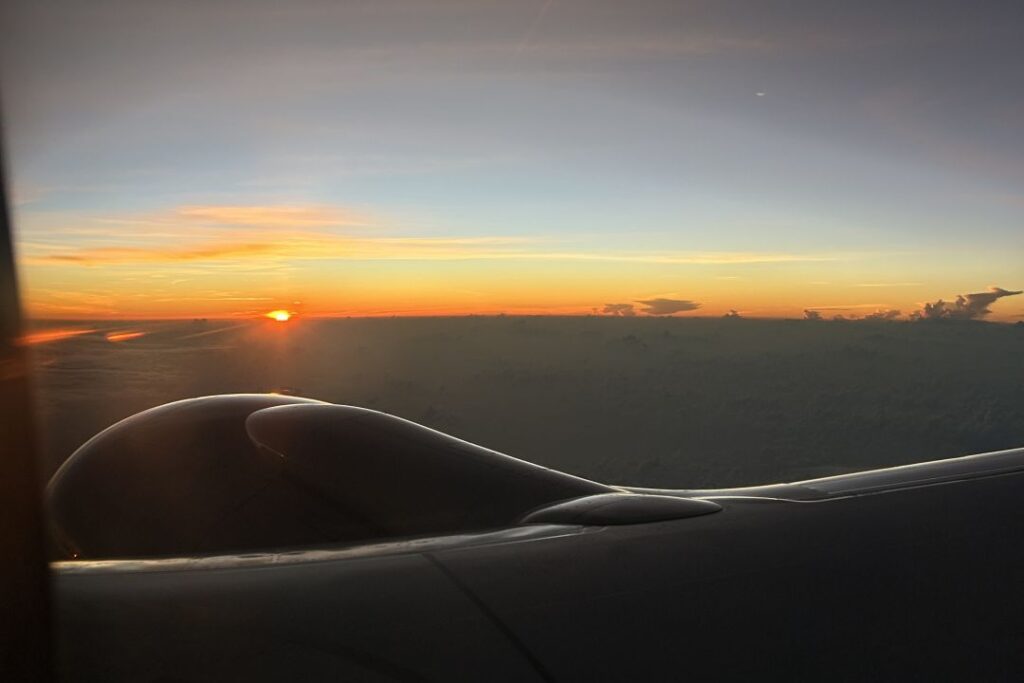
Once you have your visa, it’s time to book your flight to NZ. I think the important thing is to make sure your flight arrives within the window of your visa validity, especially if you’re flying very near to the expiry (e.g. 12 months from the date of approval). Your arrival date in NZ will also determine the start date of your WHV and when it will end the following year.
You are not required to have a return flight ticket as a working visa holiday holder, so you can book a one-way flight to New Zealand! However, immigration may ask for proof of sufficient funds. But I didn’t have to show any proof and I’ve not heard of this being an issue for anyone so far?
As I didn’t know when I intended to come back home, I booked a one-way ticket to NZ. If you already have plans to fly back home for the holidays etc it might be more worth it to book a return ticket from the get-go.
Flight prices from Singapore to New Zealand can be quite expensive at SGD1k+ for a one-way direct flight to Auckland on full carriers like Singapore Airlines and Air New Zealand. As I wanted to save more money and had time, I took a flight with an 18 hour layover in Guangzhou. The journey was from Singapore > Guangzhou > Auckland and cost SGD816 🙂 Worth it to me as I got to spend time exploring Guangzhou for a bit!
Where to land in New Zealand?
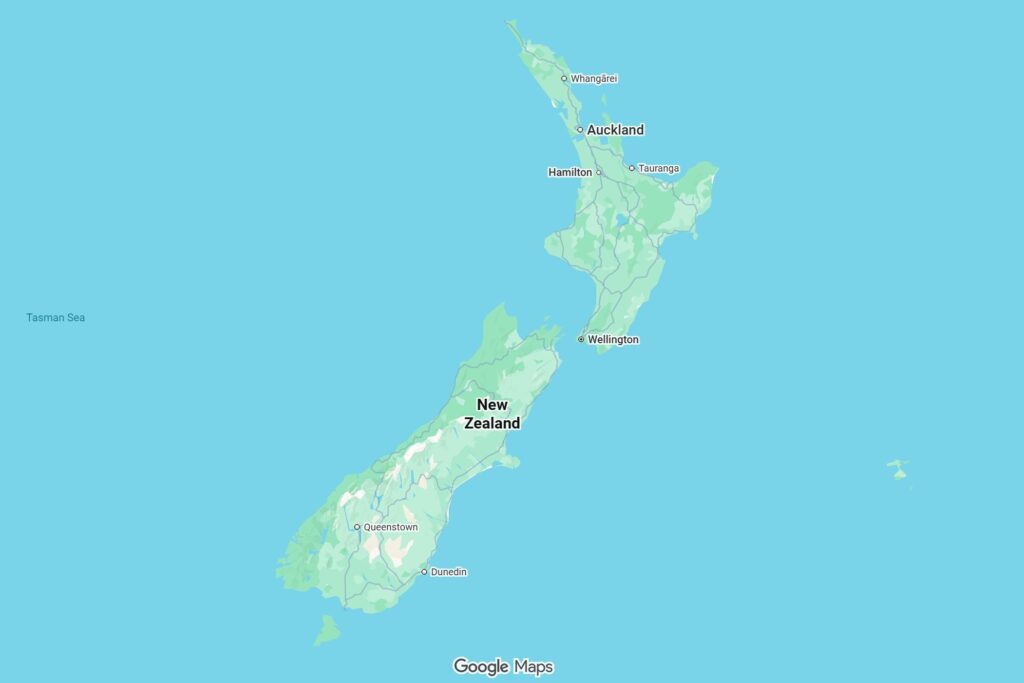
New Zealand is made up of two main islands: North Island and South Island.
They are not connected by land, and you can’t just drive over like from Singapore to JB. Travelling between the North & South islands requires a ferry or flight. The inter-island ferry can be costly, especially if you’re bringing a car on.
Because of this, it’s worth thinking about which island you want to start your WHV journey on, rather than assuming you’ll easily move back and forth.
North or South Island?
This is really a matter of personal preference, what month you’re arriving and what you intend to do on your working holiday visa. But some things to consider:
- Season & weather: The North Island is generally warmer year-round, while the South Island has colder winters and more extreme seasonal changes.
- Seasonal work/activities: Different seasonal jobs peak at different times depending on the island and region. If you have a specific seasonal job you really really want to do it would be good to know when and where it is available. For example, cherry picking jobs run from mid-December to late January/early February and its major hub is in Central Otago in South Island.
You’ll most likely start your WHV in a city where your flight from SG arrives from and it also allows you to settle admin stuff more conveniently with public transport. If you want to start in the North Island, this is likely to be Auckland/Wellington and if you want to start in the South Island, it would likely be Christchurch.
But the world is your oyster! If you have other plans or already know people in NZ, it is also possible to get started in other places.
My experience:
I started my WHV in Auckland and stayed outside the city center. It was easy to get to nearby towns to settle all we needed travelling via bus. This included setting up our bank account, buying groceries and buying a car.
We actually settled these things without having to go into Auckland CBD so as long as your first accommodation is accessible to your required amenities it’s not really necessary imo to be in the city centre.
Of course, being in the CBD may offer more convenience in having bank options that are within walking distance of each other etc but accommodation prices are likely to also be more expensive.
When Is the Best Time to Arrive?
There’s no single “best” month to arrive in New Zealand, it is beautiful all year round 🙂
What is important to understand is that your arrival timing affects job availability and the weather. As Singaporeans living in year-round heat and humidity, we are not used to the cold so it’s good to be aware that it can be quite cold during winter in the South Island.
Overview of seasons in New Zealand
- Summer (Dec–Feb): Peak season for hospitality, tourism, orchards, vineyards, and general casual work. The weather is warm during the afternoons, but still cold by SG standards in the morning and night.
- Autumn (Mar–May): Grape harvests and shoulder-season tourism; still good job availability.
- Winter (Jun–Aug): Fewer casual jobs overall, except in ski towns and winter tourism areas.
- Spring (Sep–Nov): Warmer weather begins, seasonal and tourism work starts picking up.
If you are very interested to work in a particular season (e.g. kiwifruit picking) it might be helpful to arrive in NZ slightly earlier to sort out your IRD number to secure your job before the season starts. To get an idea of what seasonal work is available in each region every month, you can refer to this seasonal work calendar.
We arrived “off-season” in winter and started our WHV journey with a road trip to Cape Reinga in the Far North. Many others choose to arrive in winter to work in ski fields. So it really depends on what you plan to do and there isn’t a perfect timing.
2. Book Your First Accommodation
Before flying, you may want to book short-term accommodation for your first few nights in New Zealand that will give you:
- A place to stay while you settle admin stuff in NZ / find your next place to stay
- An address for admin purposes
- An opportunity to meet new people (maybe)
Accommodation in general throughout New Zealand is expensive in general and becomes more pricey especially during peak seasons and in centrally located areas.
These are the options you can consider as well as the pros and cons of each!
Hostels
Hostels are a great place to meet other travellers and WHV holders. Especially if you’re travelling solo, it would be a good place to meet people which could also lead to finding new travel buddies and/or job leads.
They tend to cost 45-80NZD per night for a bed in a shared dorm and it comes with benefits that might be helpful especially for solo travellers.
Many popular backpacker hostels are usually located in the city center near amenities. It is likely if you want people to talk to / need help with admin stuff that you can probably reach out to the people around / hostel receptionist and they would be familiar with these things to help you out (e.g. proof of address for bank).
Some popular hostels among WHVers include Haka House & Lylo.
Overview of hostels:
- Great for meeting new people
- Usually good location
- Likely need to stay in a shared dorm with shared amenities
Airbnb
Airbnb’s offer more privacy and comfort to start your journey but it can be lonely because you don’t get to meet other travellers easily at your accommodation.
With Airbnb, the prices tend to vary widely depending on the location and what’s offered.
I managed to book a 14-night stay 30mins outside of Auckland city-centre (by bus) for ~1600NZD. When split between 2 people, it’s ~57NZD per person each night which is around the same price/cheaper than a hostel and we had our own kitchen, laundry amenities and parking lot.
But it also meant we didn’t meet any other travellers at the start during our time there.
Overview of Airbnb:
- More privacy and comfort
- Price can be high based on location
- More value for couples/groups who can split the cost
Short-term flatshare
Another option we found out could work as a place to stay in Auckland was getting a short-term flatshare.
We found some flatshare houses located in Flatbush Auckland via Facebook and from other WHVers. It seems to be popular among WHV go-ers from SG, MY & TW but we didn’t end up staying so I am not 100% sure but you can reach out to me if you would like the contacts of the sharehouses we found.
We enquired for a couple room (since we came as a couple) and the rates ranged between 160-180NZD per week for each pax (~23-25NZD per person each night). Not sure about the rate for a single room, but it should not vary too widely.
This seems to be the cheapest option and a middle ground between hostels and Airbnb where you get your own private room with shared amenities and potential to meet other WHV travellers as well.
However, the con is that most of these places have a minimum stay requirement that can range from 2 weeks to 1 month and most places will ask for a deposit of 2 weeks.
If you have plans to stay in Auckland for long (e.g. plan to find seasonal work nearby), this could be a good option to explore but if you only intend to be in the city for like a week then it might not be the best option.
Short-term flatshare overview:
- Affordable (for couples, at least)
- Private room, shared amenities
- Potential to meet other travellers
3. Insurance
I personally purchased OrbitProtect’s WHV insurance for my time in New Zealand and haven’t had to use it so far (thankfully). They’re a New Zealand–based company and offer a Working Holiday-specific insurance plan, which many WHV holders I’ve met also use.
From my understanding, their policy covers travel within New Zealand, Australia, and parts of the South Pacific, so if you’re mainly spending your WHV in NZ with the occasional trip to Australia or a nearby island, this type of coverage may be sufficient.
That said, the insurance policies do change, so it’s important to read the latest policy wording and do your own research. If you plan to travel to more countries or want broader coverage, you may want to look into other insurance options that better suit your travel plans.
4. Pack Your Bags!
Packing for a year on a working holiday visa can feel overwhelming, especially with 4 different seasons!
My biggest advice is: don’t bring too many things. New Zealand has good access to clothing, gear, and essentials and you can find good quality, affordable items at op shops.
The weather here is also much more comfortable than in Singapore and you won’t sweat as much compared to back home. We can get away with re-wearing clothes for a few days here.
I’ll share more about what I recommend to pack for NZ WHV in another blog.
5. Change SG Telco (Optional)
This step is optional, but I personally did it for savings and convenience since I won’t be in SG to use my data.
Consider switching to a cheaper monthly mobile plan that gives you some data in NZ and roaming to receive SMS while you are there. It’ll ensure you have ability to receive OTPs for bank logins and important accounts (e.g. SingPass, HDB etc) while in NZ.
You can also use your SG telco roaming for data in NZ during your first few days to tide you through until you get a local NZ mobile plan.
Arriving in NZ
In your first days in New Zealand, there are a few essential things you’ll need to sort out, such as:
- Applying for your IRD number
- Opening a New Zealand bank account
- Getting a local SIM card
- Finding work (if you want)
- Buying a car (if you plan to travel or work outside cities)
Some can be done while you are in Singapore, but personally I think it is easier to do these when you have arrived in NZ. You can read more in my blog about things to settle once you have arrived in NZ.
If you’ve read this far, hope this was helpful for you in some way, it’s the first step to an exciting journey ahead!